
The Core Issue: Rigid Systems Limiting Mortgage Growth
Traditional mortgage financing models often fail to scale with changing economic demands. As lending portfolios grow, issues like liquidity shortages, inconsistent rate structures, and slow loan processing emerge. The lack of scalability increases exposure to market volatility, leading to unstable commercial mortgage rates and reduced borrower confidence.
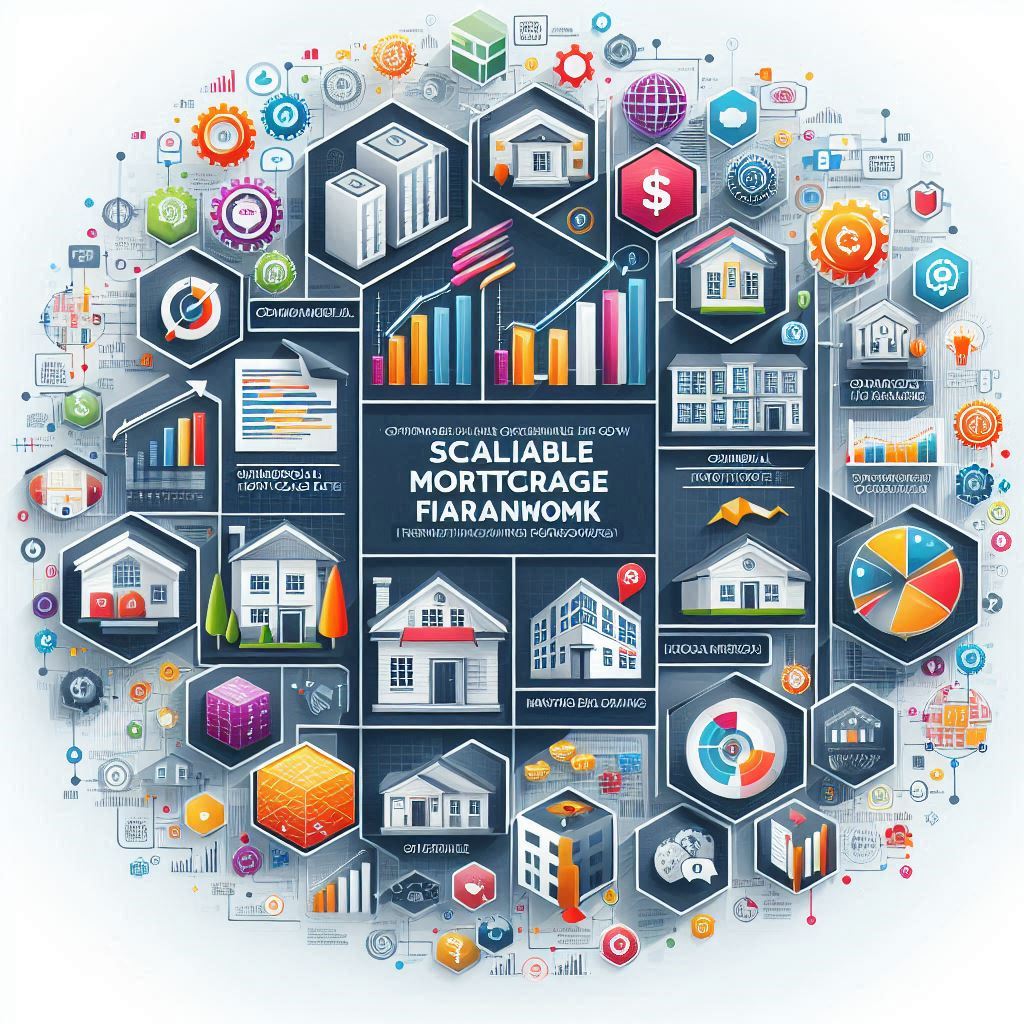
The critical question: How can lenders create scalable financing frameworks that maintain stability in commercial mortgage rates while expanding loan access and reducing systemic risk?
2. New Research: Modular Lending Architecture Model (MLAM)
A 2025 study by the Global Mortgage Innovation Institute (GMII) introduced the Modular Lending Architecture Model (MLAM) — a scalable system integrating technology, capital optimization, and risk diversification into mortgage financing.
Key Findings from MLAM Research:
- Lenders implementing MLAM increased lending capacity by 58% without compromising risk control.
- Rate fluctuations in commercial mortgage rates were reduced by 31% across varying market cycles.
- Loan approval times improved by 47%, due to automation and flexible capital reallocation.
This research proves that scalability is not only about growth but about maintaining rate consistency and capital efficiency in fluctuating economies.
3. Step-by-Step Scalable Solution Framework
- Capital Pool Diversification:
Use multiple funding channels (institutional, retail, and tokenized assets) to ensure liquidity even during downturns. - Dynamic Risk Segmentation:
Divide borrowers into data-driven clusters for personalized rate optimization, stabilizing commercial mortgage rates across segments. - Automated Loan Origination:
Employ AI underwriting tools to speed up application processing while ensuring accurate borrower assessment. - Modular System Design:
Build infrastructure that allows quick integration of new technologies, partners, and regulations without disrupting existing operations. - Performance Monitoring Dashboards:
Deploy real-time analytics to track portfolio performance and make predictive rate adjustments.
This modular approach empowers lenders to scale smoothly while preserving transparency, control, and lending consistency.
4. Innovation Spotlight: Elastic Credit Expansion (ECE)
The next evolution in scalable frameworks is Elastic Credit Expansion (ECE) — a fintech-driven model that adjusts available credit and rate thresholds automatically based on macroeconomic indicators.
Advantages of ECE:
- Maintains balanced commercial mortgage rates even in high-demand cycles.
- Enables lenders to expand or contract credit efficiently.
- Reduces dependency on centralized capital sources.
ECE aligns lending capacity with real-time market behavior, ensuring scalability without destabilizing mortgage markets.
5. Objection 1: “Scalable systems are too costly for mid-sized lenders.”
Answer:
Scalability no longer requires massive investment. Cloud-based mortgage infrastructure and API-driven fintech integrations now allow modular scaling at a fraction of traditional cost. Research by Fintech Transformation Council (2024) shows mid-sized lenders saw ROI within 18 months of digital framework adoption — mainly due to faster processing and reduced operational overhead.

6. Objection 2: “Rapid scaling could lead to risk dilution.”
Answer:
Modern scalable frameworks embed AI-driven risk intelligence that continuously monitors portfolio exposure and borrower behavior. This ensures that as loan volumes expand, risk parameters stay intact. In fact, lenders using predictive analytics experienced 22% lower default rates during scale-up phases, with stable commercial mortgage rates throughout.
7. Objection 3: “Decentralized or modular systems may be difficult to regulate.”
Answer:
Scalable frameworks are built with RegTech compliance modules that automatically apply regulatory updates. This allows institutions to operate across multiple jurisdictions with real-time audit trails and documentation transparency — satisfying regulators and protecting borrowers alike.
8. Benefits of Scalable Mortgage Financing Frameworks
- Stability in Commercial Mortgage Rates: Diversified capital sources and predictive modeling reduce volatility.
- Faster Market Adaptation: Systems automatically adjust to rate shifts, policy changes, or borrower demand.
- Enhanced Lending Capacity: More loans can be processed and financed without straining infrastructure.
- Operational Efficiency: Automated workflows reduce costs and human error.
- Resilience Against Economic Shocks: Modular design ensures continuity even in recessionary phases.
This scalability ensures long-term financial sustainability across mortgage ecosystems.
9. Emerging Trend: Tokenized Debt Platforms (TDPs)
The future of scalable frameworks lies in Tokenized Debt Platforms (TDPs) — blockchain-based systems where investors directly fund mortgage pools via digital tokens.
TDPs increase liquidity, reduce intermediary costs, and create transparent yield tracking mechanisms tied to commercial mortgage rates.
By integrating digital assets into traditional mortgage markets, lenders gain flexibility, while investors access new, transparent income channels.
Scalable mortgage financing frameworks represent a paradigm shift in the way financial institutions manage growth, risk, and rate stability. Through modular architectures, diversified capital flows, and predictive automation, lenders can achieve expansion without sacrificing control or compliance.
When scalability meets intelligence, commercial mortgage rates become not just a reflection of market forces — but a product of strategic adaptability. The mortgage industry’s future lies in systems that can expand, evolve, and self-correct — creating sustainable pathways for both lenders and borrowers.