
The Core Issue: Volatility and Default Risk in Lending
One of the biggest challenges in modern finance is balancing lending profitability with long-term borrower stability. Economic shifts, inflation spikes, and interest rate volatility make commercial mortgage rates unpredictable. Lenders face rising default risks, while borrowers struggle to maintain fixed repayment commitments.
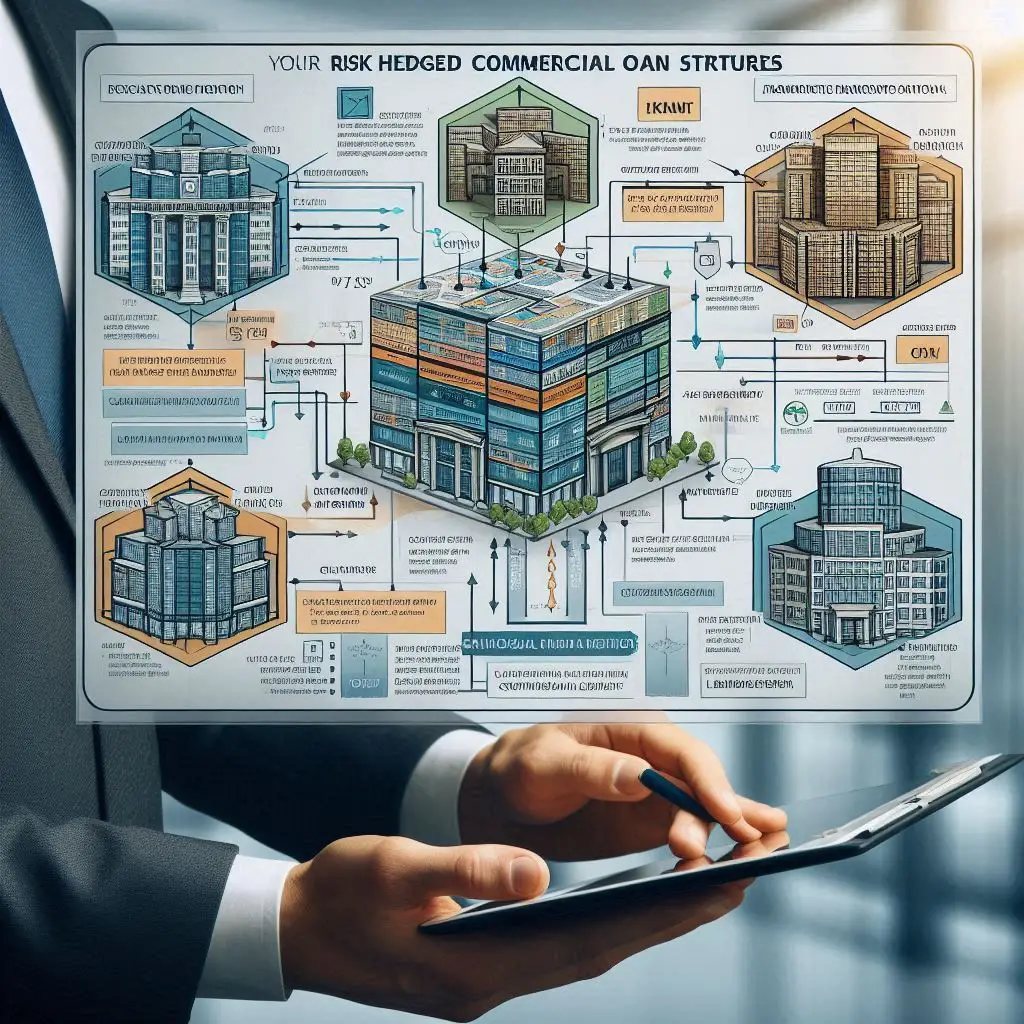
The pressing question: How can we design risk-hedged commercial loan structures that protect both lenders and borrowers in uncertain markets?
2. New Research: The Hybrid Risk-Hedging Framework (HRHF)
Recent research from the Global Finance Innovation Council (2025) introduces a revolutionary concept — the Hybrid Risk-Hedging Framework (HRHF). This model blends derivative-based interest rate hedging, cash-flow insurance, and AI-driven borrower risk mapping to ensure stable commercial mortgage rates even in high-volatility markets.
Key Findings:
- Loans using HRHF saw 25% lower default rates during interest spikes.
- Hedged structures improved lender liquidity without raising borrowing costs.
- Predictive analytics enabled early detection of potential borrower distress.
3. Step-by-Step Solution Approach
- Dynamic Rate Hedging:
Implement forward rate agreements (FRAs) and interest rate swaps to offset fluctuations in commercial mortgage rates. - Cash Flow Buffering:
A percentage of borrower payments is allocated into a liquidity buffer fund that can absorb temporary shocks. - AI-Driven Risk Assessment:
Machine learning models track borrower performance, industry volatility, and credit trends to predict risk exposure in real-time. - Sectoral Diversification:
Loans are distributed across multiple industries—logistics, healthcare, tech, and agriculture—to reduce correlated risks. - Performance-Linked Repricing:
Instead of static rates, adaptive rate bands adjust slightly according to verified borrower performance metrics.

This combination provides both predictability and flexibility—two critical elements of recession-resistant lending.
4. Innovation Spotlight: Collateralized Risk-Swapping (CRS)
A new trend in risk-hedged finance is Collateralized Risk-Swapping (CRS)—an evolved model where lenders pool loan risks into a digital ledger and redistribute them among institutional investors.
Benefits:
- Reduces concentration risk.
- Keeps commercial mortgage rates competitive by stabilizing funding sources.
- Enables transparent tracking through blockchain auditing.
This innovation transforms traditional commercial lending into a decentralized, risk-shared financial ecosystem.
5. Objection 1: “Hedging tools increase operational complexity and costs.”
Answer:
Initial setup costs are offset by long-term stability. A 2024 European Banking Federation study found that hedged commercial portfolios maintained 20% higher ROI during volatile cycles compared to non-hedged portfolios. Additionally, automated fintech platforms now execute swaps and derivative contracts seamlessly, reducing manual complexity by up to 40%.
6. Objection 2: “Borrowers might find hedged loans too sophisticated to understand.”
Answer:
Transparent digital dashboards now allow borrowers to view real-time impacts of rate adjustments and hedging mechanisms. Simplified reporting and visual analytics ensure clients understand how commercial mortgage rates are protected, building trust and reducing communication gaps between lenders and borrowers.
7. Objection 3: “Market unpredictability can still outpace hedging efficiency.”
Answer:
That’s true for static hedging. However, the new adaptive hedging algorithms powered by AI re-evaluate hedge ratios every quarter based on economic signals, effectively minimizing mismatches. This proactive model prevents hedge decay—a major flaw in traditional structures.
8. Empirical Benefits of Risk-Hedged Loan Structures
- Rate Stability: Smooths out volatility in commercial mortgage rates across market cycles.
- Capital Protection: Reduces lender exposure to default through built-in hedges.
- Borrower Confidence: Predictable repayments increase business sustainability.
- Liquidity Retention: Lenders maintain continuous cash flow despite market swings.
- Enhanced Credit Ratings: Institutions using risk-hedged structures often receive higher credit scores from rating agencies.
9. Research Trend: Tokenized Loan Instruments (TLI)
Emerging fintech ecosystems are experimenting with Tokenized Loan Instruments (TLI)—digital contracts that integrate risk-hedging protocols directly into blockchain-based loan tokens.
These instruments auto-adjust interest parameters and repayment schedules using smart contracts, keeping commercial mortgage rates stable while ensuring complete auditability.
Risk-hedged commercial loan structures represent the future of intelligent finance—where technology, transparency, and predictive analytics converge to create stability. Instead of reactive crisis management, lenders can now proactively manage risk through dynamic hedging, AI oversight, and borrower-centered flexibility.
As economic cycles continue to evolve, only those institutions that integrate hedging intelligence into their loan architecture will be able to sustain competitive commercial mortgage rates while preserving long-term profitability.